.png)


.png)
The Investor’s Blueprint: Maximizing Return on Investment for Bali Villa Rentals
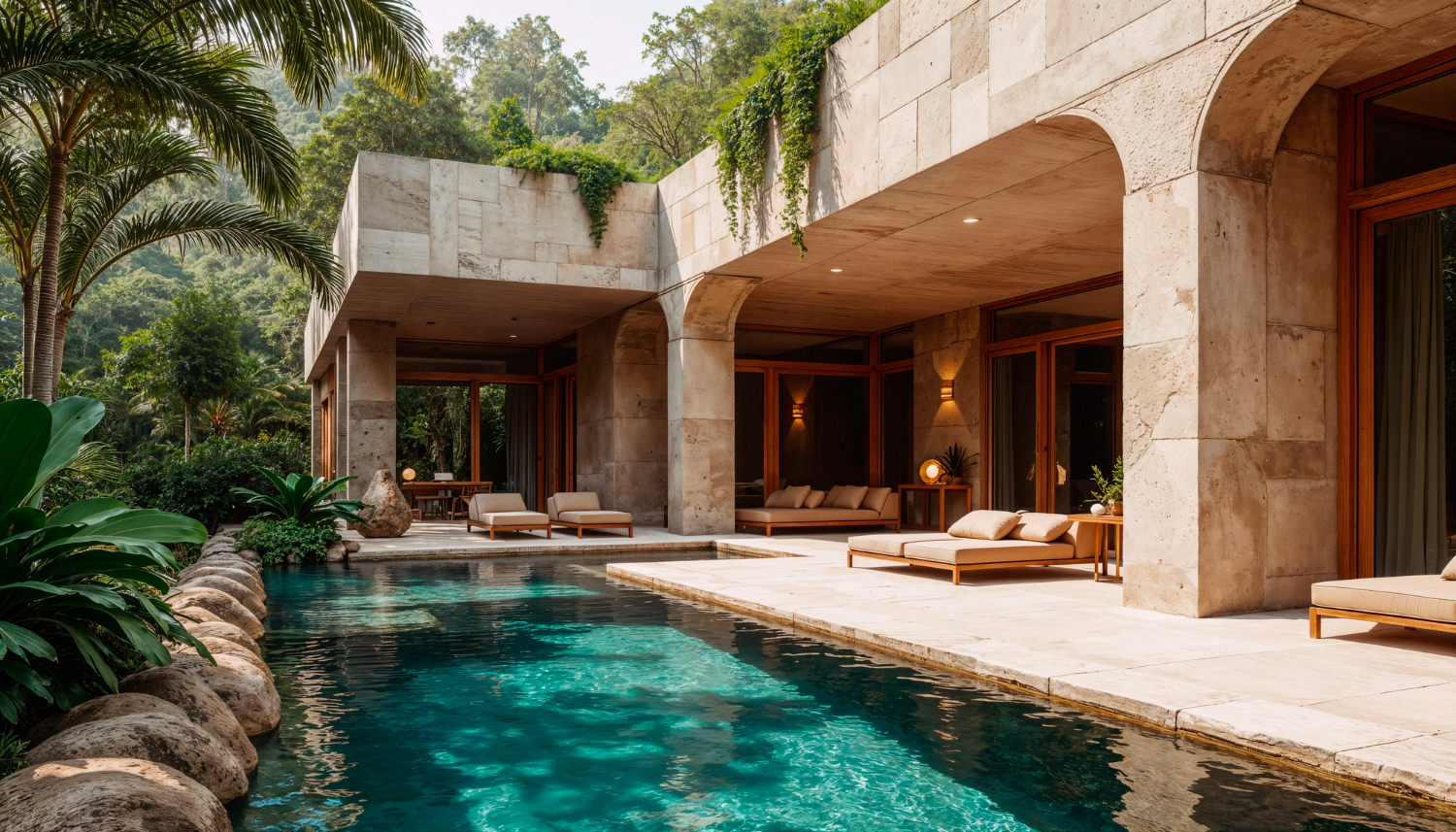
The allure of Bali is often visual: emerald rice terraces, dramatic cliff-tops, and the unique spiritual hum of daily life. However, for the sophisticated investor, the island holds a different kind of beauty one found in the numbers. When compared to the saturated real estate markets of Europe, Australia, or North America, where yields often stagnate between 3% and 5%, the return on investment for Bali villa rentals presents a compelling financial anomaly. It is not uncommon for well-positioned assets in Bali to generate net yields of 10% to 15%, or even higher in emerging hotspots.
At JK Global Properties, we witness the excitement these figures generate. Yet, we also see the pitfalls of investing based purely on optimism. A successful investment here is not a lottery ticket; it is a calculated business operation. Achieving superior returns requires a granular understanding of market dynamics, operational costs, and the specific "demand drivers" that make one villa fully booked while the one next door sits empty.
The Bali Yield Advantage: Why the Numbers Work
To understand the potential, one must first understand the structural advantages of the Indonesian market. The high returns are driven by a unique combination of lower entry costs and high-occupancy tourism demand.
Lower Capital Entry Point
In Sydney, London, or California, a luxury property near the ocean requires a multi-million dollar investment, creating a massive barrier to entry that dilutes the percentage of return. In Bali, particularly under the Leasehold structure, premium assets can be acquired for a fraction of that cost. When the denominator (investment cost) is lower, and the numerator (rental income) remains high due to global tourism demand, the resulting percentage your ROI naturally spikes.
Year-Round Demand Cycles
Unlike European summer destinations that shut down for six months, Bali is a year-round economy. While there are peak seasons (July, August, Christmas, New Year) and shoulder seasons, the island never truly sleeps. The rise of the digital nomad sector has filled the gaps of the traditional "low season," creating a consistent baseline of occupancy for properties equipped with high-speed internet and workspaces.
The ROI Formula: Location, Design, and Operations
Calculating the return on investment for Bali villa rentals is not a static equation. It is a dynamic result of three variables: where you buy, what you build, and how you run it.
1. The Geography of Yield
Not all land is created equal. We categorize Bali’s investment zones into three distinct tiers, each offering a different risk/reward profile.
- High Yield, High Competition (Canggu, Pererenan, Berawa): This is the engine room of Bali’s short-term rental market. Properties here command the highest nightly rates. Occupancy is high, but so is the competition. To succeed here, your property must stand out. The land prices are higher, but the cash flow is immediate and robust. Investors here prioritize cash-on-cash return.
- Capital Appreciation & Growth (Seseh, Kedungu, Tabanan): Moving west, land prices drop significantly. Here, the ROI strategy is a hybrid: you get solid rental returns (as tourists seek quieter alternatives to Canggu), but the real "profit" lies in the appreciation of the underlying asset (or lease value) over the next 5 to 10 years. This is for the investor with a medium-to-long-term horizon.
- Steady Stability (Ubud, Sanur): These markets are less volatile. They attract families, older demographics, and wellness travelers who tend to book longer stays. The nightly rates might be slightly lower than a beachfront party villa in Canggu, but the occupancy is often more consistent, and the wear-and-tear on the property is significantly lower.
2. The "Instagrammability" Factor and Design
In the current market, design is not just aesthetic; it is a marketing tool. A villa’s ability to stop a user from scrolling on Airbnb or Instagram directly correlates to its occupancy rate.
- The "Wow" Feature: Standard villas get standard returns. High-ROI properties almost always feature a signature element: a sunken living room, a glass-bottom pool, a rooftop jacuzzi with sunset views, or bamboo architecture. These features justify a premium nightly rate.
- Functional Durability: However, design must be practical. We advise clients to use durable materials teak wood, terrazzo, stone that withstand the tropical humidity. Replacing cheap laminate flooring every two years will destroy your net profit.
3. Operational Excellence
This is where most projections fail. A spreadsheet might show 90% occupancy, but reality requires management.
- Professional Management: Unless you live here and treat it as a full-time job, you need a management company. They typically charge 15% to 20% of gross revenue. This fee covers marketing, guest communication, and staff supervision. While it seems like a cost, good management actually makes you money by driving occupancy and maintaining 5-star reviews.
- Maintenance: A tropical climate is harsh. Pumps break, roofs leak, and mold grows. A realistic budget must set aside 3% to 5% of revenue for a "sinking fund" to keep the asset in pristine condition.
Gross vs. Net: The Reality Check
When analyzing a Bali investment property, you must strip away the vanity metrics. Real estate agents often quote "Gross ROI." At JK Global Properties, we focus on "Net ROI." Here is what a realistic deduction waterfall looks like:
- Gross Rental Income: (Nightly Rate x 365 days x Occupancy %).
- Platform Fees: Airbnb and Booking.com take roughly 15-18%.
- Marketing/Agent Commission: If using direct bookings or agents (10-20%).
- Operational Expenses (OpEx): Staff salaries, electricity (PLN), internet, pool chemicals, laundry, cleaning supplies, Banjar fees, and garbage collection.
- Tax (PB1): The 10-11% hospitality tax required by the government on revenue.
- Income Tax (PPH): The final tax on your earnings (varies based on structure, typically 10% final tax for leasehold rentals).
A property generating $100,000 in gross revenue might net $60,000 to $65,000. If that property cost $400,000 to build, your Net ROI is a very healthy 15-16%.
This is the level of transparency we provide in our pro-forma analyses.
The Leasehold Amortization Factor
A critical nuance for foreign investors is the Leasehold (Hak Sewa) structure. Because you own the asset for a finite time (e.g., 25 years), your ROI calculation must account for the fact that the asset value theoretically hits zero at the end of the lease (unless extended).
Therefore, your annual income is not just "profit"; it is a mix of profit and capital recovery.
- The Break-Even Point: In a strong Bali investment, investors typically aim to recover their entire initial capital within 5 to 7 years.
- The "Pure Profit" Phase: Once the capital is recovered, the remaining 18 to 20 years of the lease are pure profit generation.
- The Extension Strategy: Smart investors negotiate a guaranteed extension clause in their lease. This turns a depreciating asset back into an appreciating one, as you can extend the lease and resell the property with renewed years, capturing capital gain.
Lifestyle Trends Driving Future Returns
The market is evolving. The "surfer shack" era is over. The future return on investment for Bali villa rentals is being driven by a new class of traveler.
The Rise of the "Work-from-Villa" Standard
Post-pandemic travelers are staying longer. They are not just on holiday; they are living here for a month.
- Investment Implication: Villas with dedicated, ergonomic workspaces, soundproofed rooms, and commercial-grade mesh Wi-Fi are commanding higher occupancy rates. We are seeing a shift away from "open living" (which is hot and noisy) toward "enclosed living" areas with AC, which appeals to this demographic.
Sustainability as a Selling Point
Eco-conscious travel is no longer niche. Villas that utilize solar panels, water recycling, and zero-waste practices are gaining favor. While the upfront cost is higher, the operational savings (lower electricity bills) and the marketing appeal to conscious travelers boost the long-term ROI.
Real Estate Integration: Where to Look Now
Based on current data, we identify specific opportunities for maximizing ROI:
- The "Next" Canggu: Look at Seseh and Cemagi. These areas are currently where Pererenan was five years ago. Land prices are accessible, allowing for a lower total investment. As infrastructure improves, early entrants will see massive capital appreciation alongside rental yield.
- The Luxury Cliff: Uluwatu and Bingin are seeing a surge in high-net-worth tourism. Building high-end, luxury product here (4+ bedrooms) caters to a demographic less sensitive to price, allowing for aggressive nightly rates that buffer against inflation.
Practical Recommendations for Maximizing Yield
If you are ready to enter the market, here are the operational levers you can pull to ensure your projections become reality:
- Invest in Photography: Do not skimp here. Your photos are your storefront. Hire a specialized architectural photographer who understands light and composition.
- Staff Training: Your villa staff are your hospitality team. Invest in their training. A guest who is greeted with a cold towel and a genuine smile leaves a 5-star review. Reviews are the algorithm’s currency.
- Dynamic Pricing: Do not set a flat rate for the year. Use dynamic pricing software (like PriceLabs or Beyond Pricing) that adjusts your nightly rate based on local demand, events, and seasonality. This alone can increase revenue by 10-15%.
- Respect the Banjar: Always pay your local community fees on time and treat neighbors with respect. A happy community protects your asset; a disgruntled one can make operations difficult.
The Informed Investor Wins
The narrative of return on investment for Bali villa rentals is compelling, but it favors the prepared. The days of easy money on mediocre properties are fading. Today, the market rewards excellence, strategic location, and professional execution.
At JK Global Properties, we do not just sell villas; we engineer investments. We help you look past the beautiful sunset to see the spreadsheet beneath it. By understanding the interplay of leasehold structures, tax efficiencies, and hospitality trends, you can build a portfolio that delivers not just a financial return, but the freedom to enjoy the lifestyle that makes Bali unique.
The opportunity is real, the numbers are solid, and with the right guidance, the returns are yours to capture.