.png)


.png)
Penyajaan Galungan November 17th: The Day Before the Gods Arrive
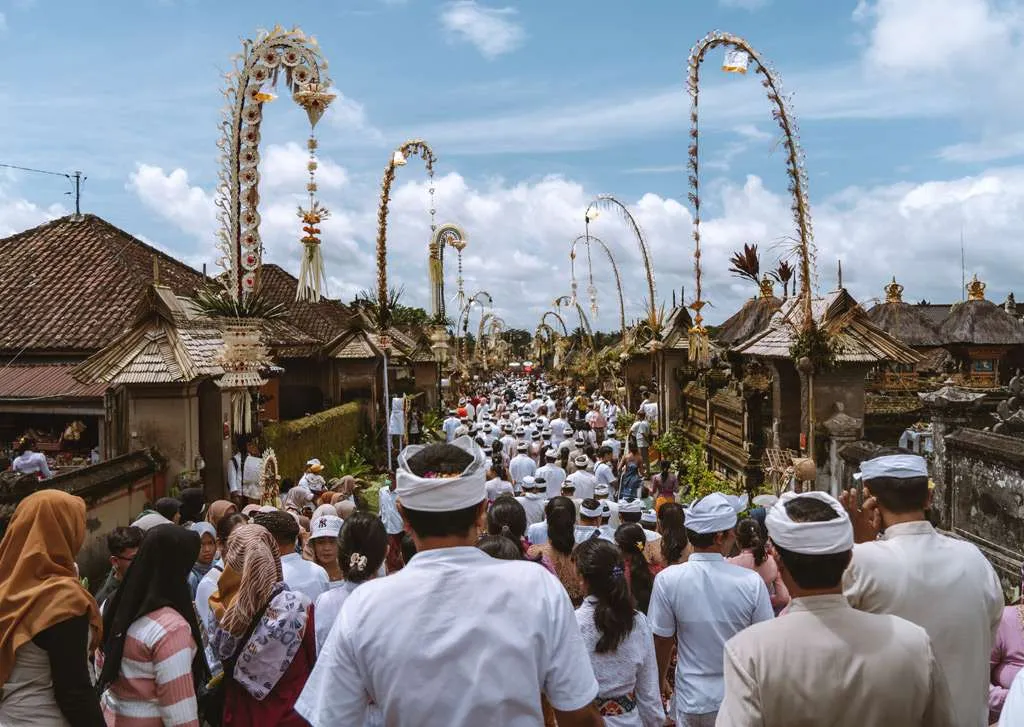
The island of Bali wakes up early on November 17th, to the sound of temple bells, the fragrance of incense, and the rhythmic movements of women carrying offerings on their heads.
It’s Penyajahan Galungan, the day before Galungan, a time of pure devotion when every Balinese home becomes a temple, and every heart turns toward gratitude and readiness.
Penyajahan is about action, the physical manifestation of faith through preparation, offering, and connection. It’s the bridge between contemplation and celebration, between the mortal and the divine.
What is Penyajahan Galungan?
The word “Penyajahan” comes from sajahan, meaning “to serve” or “to prepare.” It marks the day when offerings are created and presented to invite the gods and ancestral spirits back to earth.
According to Balinese belief, Galungan is the time when deities and ancestors descend from the heavens to visit their living relatives. Penyajahan is the moment when people make ready the sacred spaces, temples, family shrines, and homes to welcome them with beauty and devotion.
It’s not just about ritual. It’s about aesthetics, intention, and the unspoken harmony between humans and the divine.
The Energy of the Day: From Quiet to Movement
After the stillness of Penyekeban, Bali begins to hum again. Early morning markets fill with women buying flowers, coconuts, sugarcane, palm leaves, and fruit for the next day’s offerings.
By mid-morning, you’ll see families weaving banten intricate offerings made from natural materials, layered with symbolic precision:
- Rice for sustenance
- Fruits for fertility
- Flowers for purity
- Incense for the spirit’s ascent
Meanwhile, men prepare penjor, the tall, curved bamboo poles that will line Bali’s roads on Galungan Day decorated with coconut leaves, rice stalks, and woven ornaments that represent prosperity and gratitude.
The Spiritual Meaning of Preparation
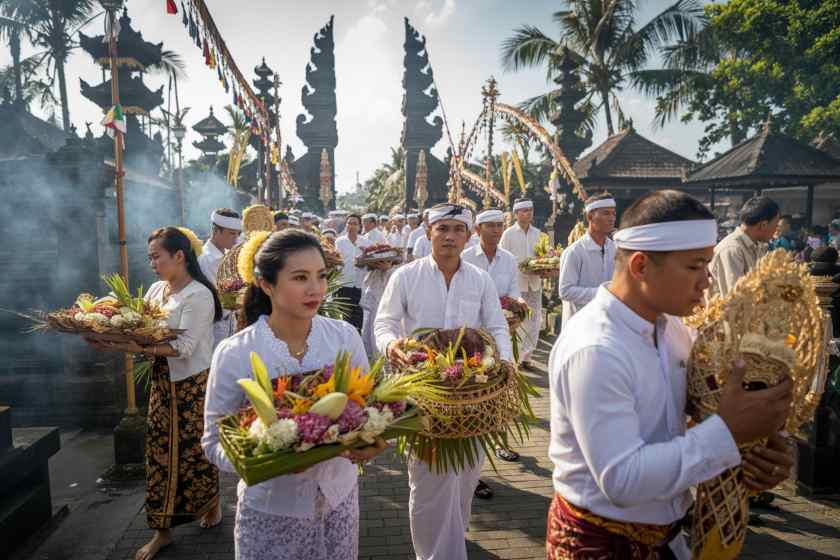
In Balinese philosophy, action is sacred when done with the right intention (niat). Penyajahan is not simply “getting ready” it’s an act of devotion that infuses the coming festival with meaning.
Every small movement cutting coconut leaves, arranging offerings, cleaning a courtyard becomes a form of prayer.
This embodies the Balinese idea of Ngayengang Raga (the movement of the soul): that spirituality is not separate from daily life. When a woman weaves a leaf into a flower basket, she’s not performing a task; she’s expressing gratitude to the universe through her hands.
The Offerings of Penyajahan
Each home creates multiple layers of offerings, depending on family size and local custom. Common offerings include:
- Banten Pejati: a complete, elaborate set containing rice, cakes, flowers, and incense, symbolizing purity and completeness.
- Sampian: ornamental leaf decorations that adorn temples and penjors.
- Daksina: offerings to major deities, made of coconuts, rice, and symbolic items.
- Banten Galungan: large trays placed in family shrines to honor ancestors arriving for Galungan.
The colors are symbolic too:
- White (purity)
- Red (energy and passion)
- Yellow (prosperity and divinity)
- Green (nature and balance)
The Sounds and Scents of the Island
The sensory experience of Penyajahan is unmistakable. The air is thick with frangipani, sandalwood, and burning incense. The soundscape includes:
- The crackling of oil as food is prepared for offerings
- The laughter of neighbors exchanging gifts of fruit or sweets
- The clatter of bamboo knives slicing coconut leaves
- And occasionally, the deep gong of a nearby temple signaling communal prayer
As the sun sets, the island glows not from electricity, but from devotion.
Connecting Culture and Contemporary Life
For modern Balinese families and for those who have chosen Bali as their home, Penyajahan Galungan is a day that bridges the ancient and the present.
Even in bustling areas like Canggu, Seminyak, and Ubud, the rhythm of preparation pauses commerce. Cafes close early, surfboards are set aside, and streets fill with the scent of canang sari, small floral offerings that adorn doorways, motorbikes, and shop entrances.
For newcomers or property owners, it’s a beautiful reminder:
Living in Bali means aligning with its rhythm. It means respecting the sacred time that flows beneath the everyday.
Food and Flavor Traditions
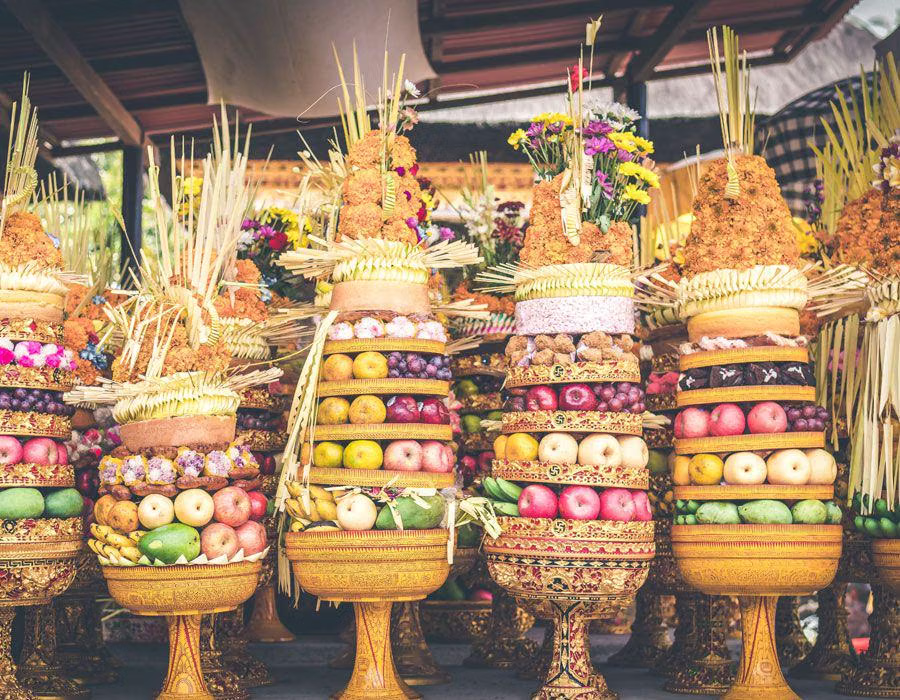
As offerings are prepared, so too are the ingredients for the great Galungan feast that follows. The kitchen becomes as sacred as the temple.
Common foods during Penyajahan include:
- Lawar: minced vegetables and coconut mixed with spices a must-have for Galungan.
- Satay lilit: ground meat wrapped around bamboo sticks and grilled.
- Jaje Bali: traditional sweets made with rice flour and palm sugar.
- Tipat cantok: compressed rice cakes served with peanut sauce and vegetables.
Women spend hours preparing these dishes, often singing or chatting together in the courtyard turning labor into joy.
Where to Experience Penyajahan Galungan in Bali
For those in Bali during this time, there are incredible opportunities to witness and respectfully experience the preparations:
1. Ubud
Temples like Pura Taman Saraswati or Pura Gunung Lebah buzz with activity. You’ll see entire families bringing offerings and priests blessing penjors before they’re raised.
- Best experience: Visit early morning to see women weaving banten under the temple gates.
2. Gianyar and Tabanan
In these rural heartlands, Penyajahan feels more communal. Villagers help each other prepare offerings in open pavilions.
- Best experience: Join a local guide who can explain the meaning behind each offering.
3. Seseh and Cemagi
These coastal villages near Canggu beautifully blend traditional culture with modern life.
- Best experience: Watch families build penjors by the beach, with the sound of waves blending into temple chants.
Preparing Your Villa or Property for Galungan Guests
For homeowners and hospitality operators, Penyajahan Galungan offers a natural opportunity to enhance both guest experience and brand authenticity.
Here’s how:
- Cultural Styling:
Decorate spaces with flower arrangements, palm-leaf ornaments, and small offerings. - Scent and Sound:
Use local fragrances frangipani, cempaka, or lemongrass and soft gamelan music to create sensory alignment with the island’s energy. - Guest Education:
Provide short guides or cards explaining the meaning of Galungan and Penyajahan. Guests appreciate context and cultural sensitivity. - Staff Connection:
Encourage your local team to share personal stories about their traditions it builds warmth and authenticity.
The Social Side: Sharing and Togetherness
Though deeply spiritual, Penyajahan is also social. Neighbors exchange fruits, cakes, and even decorative materials.
This sense of mutual assistance (gotong royong) is at the heart of Balinese society. It’s a system that sustains not only temples and ceremonies but also communities and businesses.
For anyone investing or living in Bali, understanding this value is key: collaboration, generosity, and respect are the unseen currencies of this island.
Reflection: The Beauty of Balance
As dusk falls, the sound of prayers rises again. The final offerings are placed on family altars, incense smoke curls into the air, and a deep calm settles over the island.
Tomorrow will be Galungan, the day of victory but tonight belongs to preparation, gratitude, and beauty.
Penyajahan reminds everyone Balinese or foreign, local or visitor that faith is not only found in temples; it’s created through care, action, and presence.
Closing Thoughts
In a world that moves fast, Bali teaches us the art of slowing down, of finding holiness in preparation, not just celebration.
For us, this day reflects our core philosophy: that harmony, intention, and respect are the real foundations of lasting value. Just as the Balinese prepare their homes for the gods, we prepare each property with a sense of place honoring the land, the culture, and the people who make Bali so extraordinary.
So, as Penyajahan Galungan unfolds on November 17th, may every offering whether of fruit, flowers, or gratitude remind us that prosperity begins with purpose, and purpose begins with devotion.