.png)


.png)
Penampahan Kuningan November 28th in Bali: Preparation Day Rituals

Penampahan Kuningan November 28th marks the final preparation day before the deeply meaningful celebration of Hari Raya Kuningan. While Kuningan is known for its bright offerings, symbolic shields, and the return of ancestral spirits to the divine realm, Penampahan Kuningan is the quieter yet essential moment that sets everything in motion. It is the day when families assemble offerings, clean sacred spaces, organize ingredients for ceremonial meals, and prepare their homes so they can welcome blessings the next morning.
Visitors and long term residents will find Penampahan Kuningan to be one of the most intimate windows into Balinese domestic life. Villages become active with weaving, cooking, praying and decorating, while temples maintain a steady rhythm of preparation. Unlike the more festive atmosphere of Kuningan itself, Penampahan offers a grounded, almost meditative energy that invites observation, learning and cultural appreciation.
What Penampahan Kuningan Represents in the Balinese Calendar
To understand Penampahan Kuningan, it helps to see it as a continuation of the Galungan cycle, a twelve day period honoring victory, gratitude and spiritual balance.
A day of final readiness
Penampahan means preparation, and this date focuses on completing all the symbolic work needed before Kuningan. Families take this moment seriously to ensure the next day is spent fully in devotion, not in tasks.
Alignment between home, family and ancestors
Kuningan is believed to be the moment when ancestral spirits return to the heavenly realm. Penampahan ensures that families send them off with respect, gratitude and beautifully prepared offerings.
The culmination of the spiritual energy built through earlier days
From Sugihan Jawa to Umanis Galungan, the days leading up to Kuningan build a sequence of purification, celebration and reflection. Penampahan Kuningan ties these threads together.
Rituals and Activities Observed on Penampahan Kuningan
Although each village has its own customs, several activities are widely practiced throughout Bali.
Preparing Kuningan offerings
Kuningan has unique offerings that are distinct from Galungan. On Penampahan, families prepare:
- Tamiang circular decorations symbolizing protection
- Endongan offerings representing provision and blessings
- Kuningan baskets filled with rice, flowers and betel leaves
- Small yellow rice cones
- Kuningan-style ketupat woven rice parcels
These offerings must be ready before sunrise the following day.
Cleaning merajan and home spaces
Families refresh their shrines and courtyards by:
- Sweeping outdoor areas
- Cleaning altars and statues
- Washing offering trays
- Replacing old palm leaf decorations
- Refreshing incense holders
Balinese households believe a clean environment invites good energy for Kuningan.
Cooking traditional ceremonial foods
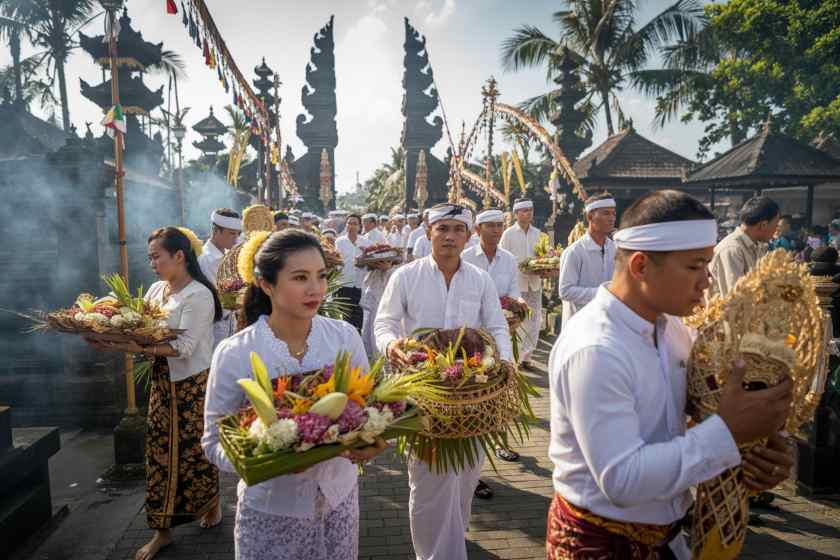
Unlike Penampahan Galungan, which involves extensive cooking and community work, Penampahan Kuningan tends to be more modest and symbolic.
Typical dishes prepared include:
- Nasi kuning, the golden turmeric rice
- Jajan pasar used in various offerings
- Light curries and vegetable dishes
- Freshly steamed cassava or sweet potato
Food preparation is simpler but still rooted in meaning.
Temple visits and quiet prayers
Some families visit temples briefly to prepare mentally for the following day, especially temples where their ancestors are honored.
Where to Experience Penampahan Kuningan in Bali
Because this is a preparation day rather than a large ceremonial gathering, the best experiences come from observing everyday village life.
Seseh and Cemagi
These coastal villages combine tradition with tranquility. Families prepare offerings along narrow lanes, and small temples remain active throughout the morning.
Ubud’s traditional districts
Walk through areas like Peliatan, Mas or Nyuh Kuning to witness families weaving tamiang, placing early offerings and drying palm leaves in the sun.
Tabanan’s rural heartlands
Villages surrounded by rice terraces provide the clearest view of Penampahan rituals, especially during early hours.
Sidemen valley
Homes in Sidemen often maintain highly ritualistic practices, creating a peaceful setting for cultural observation.
Foods and Flavors Associated With This Day
Food is essential to Penampahan Kuningan, but the dishes reflect subtlety rather than celebration.
Nasi kuning
The iconic yellow rice symbolizes prosperity and divine light. Many families prepare it fresh for the next morning.
Bananas, fruits and sweet pastries
Simple fruits and jajan pasar are prepared in advance to serve as symbolic gifts.
Plant based dishes
Balinese vegetables cooked with mild spices help families mark the transition from preparation to celebration.
Where to taste traditional food
Visitors can find authentic Penampahan style dishes in:
- Local warungs in Ubud and Tabanan
- Traditional markets in Kerobokan, Gianyar and Sukawati
- Family run eateries in Pererenan and Seseh
Best Things to Do in Bali During Penampahan Kuningan
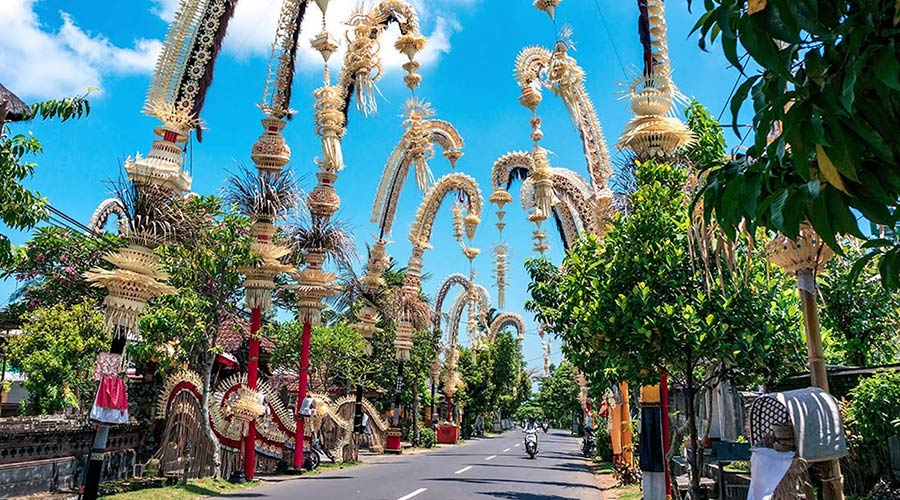
Because the day is focused and calm, activities should match the gentle pace.
1. Walk through traditional villages
Morning walks through quiet neighborhoods reveal weaving, cooking and offering preparation.
2. Visit small temples
Instead of crowded temples, choose simpler locations like:
- Pura Dalem or Pura Desa in rural villages
- Pura Merajan complexes within community compounds
These intimate spaces highlight the essence of the day.
3. Book cultural workshops
Workshops that fit well with Penampahan include:
- Offering making
- Palm leaf weaving
- Traditional cooking classes
- Meditation or grounding sessions
4. Explore Bali’s quieter nature spots
This day is excellent for:
- Rice terrace walks in Tegallalang
- Sidemen valley viewpoints
- Waterfall visits in Munduk
- Beach walks in Seseh or Kedungu
How Penampahan Kuningan Connects With Real Estate and Long Term Living in Bali
Understanding ceremonial days matters more than many foreign buyers realize.
Cultural integration builds stronger community relationships
Property owners who recognize ritual days:
- Earn respect from local neighbors
- Avoid scheduling disruptive maintenance
- Allow staff proper time for ceremonies
- Communicate more effectively with the banjar
This leads to smoother operations and long term harmony.
Guest experience improves when cultural days are acknowledged
Villas that:
- Prepare informational guides
- Offer simplified explanations of ceremonies
- Highlight local temple events
- Add flowers or small symbolic details
gain higher guest satisfaction and return rates.
Investment appeal grows in culturally rich neighborhoods
Areas like Pererenan, Seseh, Ubud and Tabanan attract guests who value authenticity. Understanding Penampahan Kuningan helps owners craft better storytelling and hospitality.
Ceremonial cycles influence occupancy patterns
Knowing the annual rhythm helps:
- Predict high demand periods
- Build themed stay packages
- Market long stay retreats
- Adjust pricing strategically
Best Areas to Stay During Penampahan Kuningan
For travelers or investors seeking cultural immersion:
- Seseh and Pererenan for quiet coastal authenticity
- Ubud for rituals, workshops and spiritual energy
- Tabanan for landscapes and traditional life
- Sidemen for untouched cultural immersion
- Bingin for a gentle balance of modern and traditional
Final Reflection on Penampahan Kuningan
Penampahan Kuningan November 28th reveals the heart of Balinese preparation rituals. It is a day that looks inward, focuses on intention and honors the connection between households, ancestors and the divine.
For investors and long term residents, it teaches how cultural understanding enhances property management, guest experience and community harmony.