.png)


.png)
Buying the Ghost: Why Smart Investors Buy Houses That Don't Exist Yet

To the uninitiated, paying for a villa that exists only as a digital render seems reckless. Yet, in the high-yield world of Bali real estate, this "off-plan" strategy is the primary mechanism for wealth creation. By purchasing a property before construction begins, investors secure a significantly lower entry price compared to finished units, effectively locking in profit margins that average buyers miss entirely.
We operate on a simple truth: if you wait until you can touch the walls, you have already lost the profit. This article dissects the three distinct financial stages of a property's lifecycle, explaining why entering at "Stage 1" captures value that later buyers pay for as a premium. We will show you why buying a "ghost" is the smartest financial move you can make, provided you understand the rules of the game.
Stage 1: The "Paper" Phase (The Wholesale Entry)
This is the stage of maximum skepticism and maximum opportunity. The property is nothing more than a legal title, a building permit (PBG), and a set of architectural renders. There is no roof, no pool, and no physical structure to inspect. For the emotional buyer, this is terrifying. For the analytical investor, this is the "Wholesale" entry point.
The Valuation Gap
When you enter at this stage, you are solving a problem for the developer. Developers need early capital to fund the initial, capital-intensive phases of construction land clearing, foundations, and structural steel. To attract this capital, they offer the property at what is known as the "pre-construction" or "off-plan" price.
- The Discount Mathematics: In the current Bali market, this entry price is typically 20% to 30% below the projected market value of the finished villa. For example, a luxury 3-bedroom villa that will eventually sell for $350,000 might be available in Stage 1 for $250,000.
- The Profit Lock: You are not paying for the house; you are funding the creation of the house. In exchange for taking the "risk" of waiting 12 months, you are granted a massive discount that essentially locks in your profit margin from Day One. If you were to buy the same villa once it is finished, that $100,000 margin belongs to the developer, not you.
The Customization Privilege
Beyond the price, Stage 1 is the only time you have genuine control over the product. Once the concrete is poured, the layout is frozen. Buying during the "Paper Phase" allows you to make strategic adjustments that increase future value.
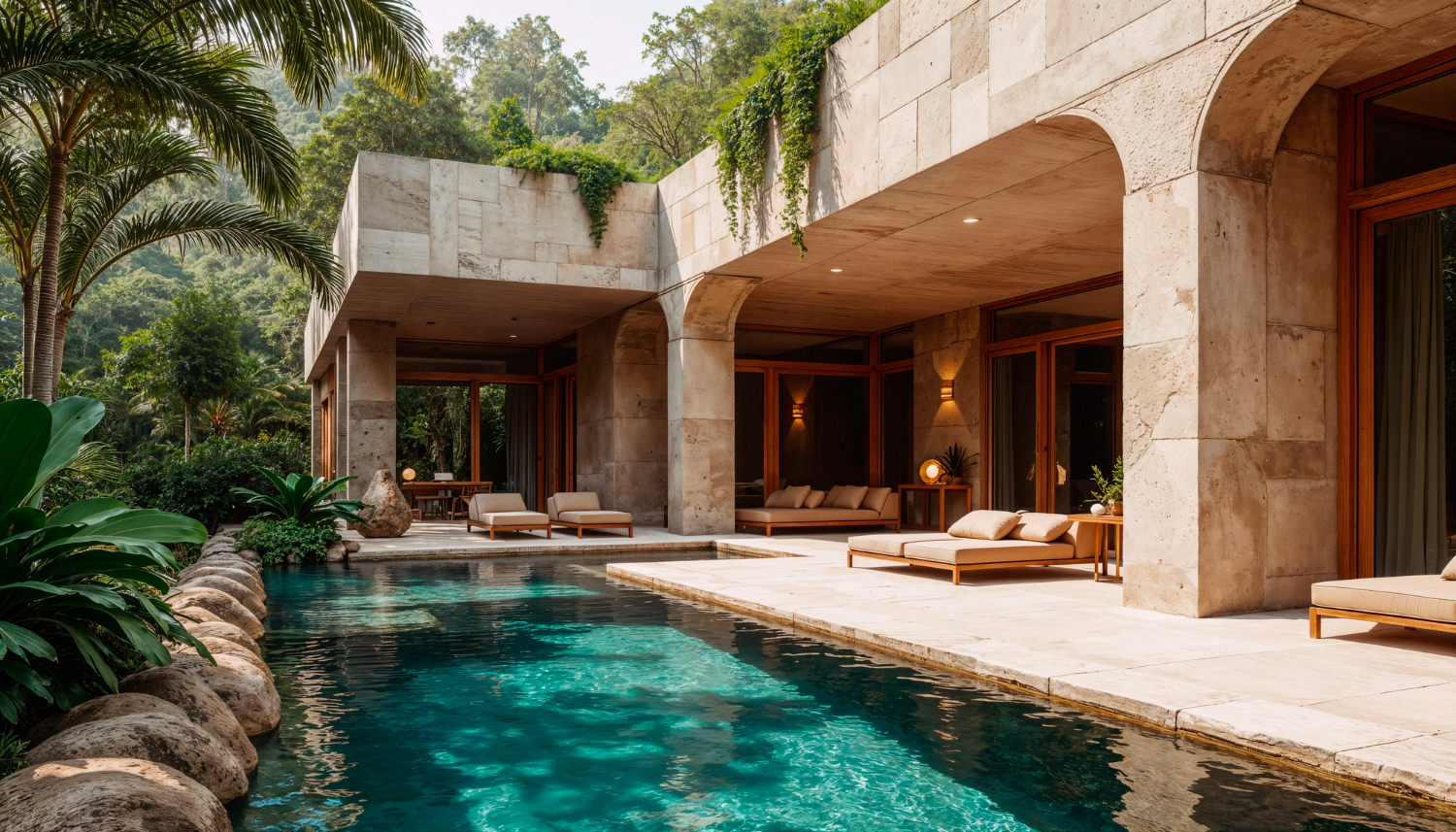
- Soft Customization: While you cannot move structural pillars due to engineering constraints tied to the PBG permit, you can often upgrade finishes. You might choose a specific natural stone for the pool that photographs better for Airbnb, select a higher grade of teak wood for the kitchen, or integrate "smart home" wiring that wasn't in the standard package.
- Emotional Ownership: These small tweaks, made at cost price during construction, can add disproportionate value to the final appraisal. You are creating a bespoke asset rather than buying a generic unit off the shelf.
Stage 2: The "Concrete" Phase (The Construction Gap)
This is the 12 to 18-month period where the physical structure rises from the ground. For the impatient investor, this is the "waiting game". However, for the smart investor, this is the phase of Passive Appreciation.
The "Construction Gap" Growth
As the villa moves from a foundation to a skeleton, and then to a roofed structure, its value does not stay static. It rises incrementally with every milestone.
- Risk Reduction: Every time a construction phase is completed such as the "Topping Off" of the roof the risk of the project failing decreases. As risk goes down, value goes up. A villa that is 60% complete is worth significantly more than a villa that is 0% complete, not just because of the materials used, but because the "uncertainty discount" is evaporating.
- Passive Growth: Data indicates that during this 12-month "Construction Gap," the asset can experience 5-10% passive appreciation. This growth happens without you lifting a finger. It is driven by the inflation of material costs and the rising value of the surrounding land. In fast-moving areas like Seseh or Uluwatu, land prices can jump significantly in a single year. By locking in your price at Stage 1, you are shielded from this inflation, while your asset's value rides the wave upward.
The Leverage of Milestones
Stage 2 also offers a critical cash-flow advantage. Unlike buying a finished home where 100% of the funds are often due upfront, off-plan projects operate on milestone payments.
- The Structure: You do not pay the full $250,000 on day one. Instead, you pay in installments tied to specific construction milestones, such as foundation completion, roof installation, and MEP (mechanical, electrical, plumbing) work.
- Financial Efficiency: This allows you to keep your capital liquid for longer. You are effectively controlling a growing asset with only a partial down payment. If you have paid 30% of the price, but the property value has risen by 10% due to market movements, your Return on Equity is massive because you haven't even deployed all your capital yet.
The "Open Kitchen" Protocol
The fear during Stage 2 is quality. Are they using the steel they promised? Is the waterproofing real? This is where JK Global Properties implements the "Open Kitchen" Protocol.
- Inspection Rights: We allow investors to inspect the "bones" of the villa the steel reinforcement bars and concrete quality before they are covered by walls and tiles. This transparency ensures that the asset you are building is structurally sound, mitigating the risk of future defects that could destroy your ROI.
Stage 3: The "Key" Phase (The Retail Exit)
This is the finish line. The villa is fully furnished, the pool is filled, the staff is hired, and the professional photos are taken. This is the Turnkey stage.
The Retail Premium
Most buyers the "lifestyle" buyers who want a holiday home immediately enter the market here. They walk in, fall in love with the view, and pay the full market price.
- The Price Shift: Remember the villa you bought for $250,000 in Stage 1? In Stage 3, it is now listed for $350,000. The Stage 3 buyer is paying for certainty. They are paying for the privilege of not waiting and not taking construction risk.
- Your Realized Gain: If you are the Stage 1 investor, this is your moment of validation. You have effectively made $100,000 in equity simply by waiting. You haven't rented it for a single night yet, but your net worth has already jumped. This "instant equity" provides a massive safety buffer against any future market volatility.
The Yield Advantage
At Stage 3, the asset transforms from a "growth" vehicle to a "yield" vehicle. Because you have a lower cost basis, your rental yields are significantly higher than the neighbor who bought in Stage 3.
- The Math: If the villa generates $40,000 in net rental income:
- Stage 3 Buyer ($350k entry): Generates an 11.4% ROI.
- Stage 1 Investor ($250k entry): Generates a 16% ROI.
- This difference in yield is permanent. For the next 25 years of the lease, you will make more money than the retail buyer, simply because you bought the "ghost."
The Warranty Asset
Furthermore, as the first owner of a new build, you benefit from a developer's construction warranty. At JK Global Properties, we provide a structural guarantee of up to 10 years. This protects you from major repair costs in the early years of operation, maximizing your net income, whereas a buyer of an older, secondhand villa faces immediate maintenance risks.
Mitigating the "Ghost" Risk
It would be irresponsible to discuss the benefits of off-plan investing without addressing the risks. The fear of the "Ghost Developer" the anonymous entity that takes your money and disappears is real. However, this risk is manageable with strict due diligence.
Verifying the Developer
The most critical step is researching the developer's track record.
- The "3-Year Rule": Visit projects they completed three years ago. Do they still look good? Or are they crumbling? A render fades, but a building endures.
- Social Proof Security: We advise avoiding anonymous developers. Look for companies with public leadership "Boots on the Ground" who cannot disappear because their reputation is their business.
The Penalty Clause
Construction delays, known locally as Jam Karet (Rubber Time), are common. To protect your investment, your contract must include a specific penalty clause.
- Daily Fines: A standard clause imposes a penalty of 1 permille (0.1%) of the contract value per day of delay. This financial pressure ensures the developer prioritizes your project. While Force Majeure (natural disasters) is a valid excuse, poor planning is not.
Legal Safety Nets
Finally, never pay a deposit until you verify the legal documents.
- PBG and SLF: You must confirm that the developer has secured the PBG (Building Approval) before construction starts. Without this, the government can stop the project.
- Escrow Accounts: Using a notary escrow account or an arrears-based payment structure ensures that your money is only released after work is verified. You never pay for work that hasn't been done.
Vision is Profitable
The reason most people do not buy at Stage 1 is not a lack of funds; it is a lack of vision. It is psychologically uncomfortable to pay for something you cannot see. It feels safer to buy the finished product. But in investment, "comfort" is expensive. The premium you pay for a finished house is the profit margin you hand over to the developer.
Off-plan investing is the tool of the sophisticated investor. It utilizes the "Construction Gap" to generate passive appreciation and secures a lower cost basis that guarantees superior rental yields for decades. By understanding the three stages of buying and partnering with a transparent developer who offers structural guarantees and open inspections you can turn the "risk" of the unknown into the certainty of high returns. The house may not exist yet, but the profit potential certainly does.