.png)


.png)
Analyzing the Off-Plan Villas Bali Investment Opportunity
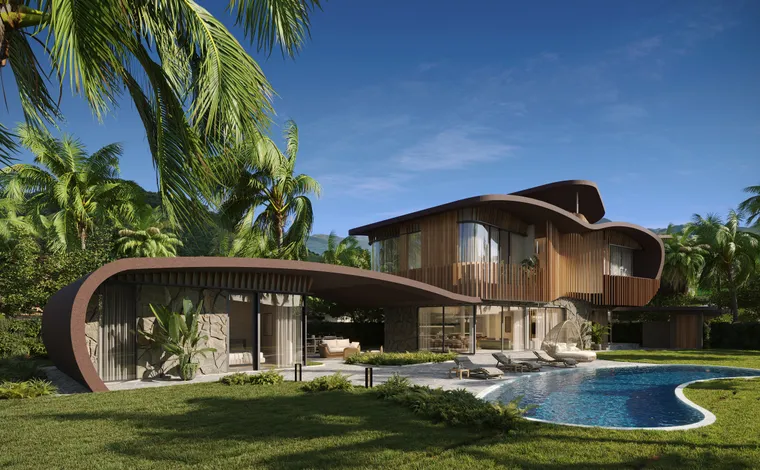
Investing in Bali's booming real estate market often means navigating the concept of "buying a render" purchasing a villa before the ground is even broken. While counterintuitive to some, this off-plan villas Bali investment opportunity is the primary vehicle for sophisticated investors to secure entry prices 20-30% below market value, capturing significant capital appreciation before the doors even open.
At JK Global Properties, we believe this strategy is the smartest financial move available, provided it is executed with rigorous due diligence. The difference between a high-yield asset and a cautionary tale lies in closing the gap between the digital promise and the physical reality. In this article, we explore the mechanics of off-plan investing, how to mitigate the risks of pre-construction, and why transparency is your most valuable asset.
The Financial Logic: Why Buy Before It’s Built?
Why would a rational investor put hundreds of thousands of dollars into a project they cannot touch? The answer is simple: Capital Appreciation.
Buying a finished, turnkey villa in a prime location like Canggu entails paying the full market premium. The developer has taken the risk, managed the construction, and is now selling the finished product at its maximum value. You get the keys immediately, but you also pay the highest price.
The "Construction Gap" Profit
The off-plan villas Bali investment opportunity is built on the "construction gap." Typically, an off-plan project is listed at 20% to 30% below the projected market value of the completed villa.
- The Mathematics: If a villa is sold off-plan for $250,000, its valuation upon completion (typically 12 months later) might be $320,000.
- Passive Growth: This means your asset has appreciated by $70,000 simply by being built. You have generated equity without lifting a finger, purely by funding the development phase. For investors looking to maximize ROI, this "pre-rental" gain is just as important as the rental yield itself.
Cash Flow Management
Unlike buying a finished home where 100% of the funds are often due upfront, off-plan projects operate on milestone payments.
- The Structure: A typical schedule might be a 30% deposit, followed by payments triggered by construction stages (e.g., foundation complete, roof on, finishing touches).
- The Benefit: This allows investors to manage their liquidity better, spreading the capital outlay over 10 to 14 months rather than liquidating assets to pay a lump sum immediately.
The Customization Factor
While you cannot change the structural footprint (due to PBG permit restrictions), entering early often allows for "soft customization." You might choose the stone for the pool, the specific wood finish for the kitchen, or upgrade the furniture package. This emotional ownership ensures the final product aligns with your specific taste, something impossible to achieve when buying a generic, finished spec-home.
The "Render" Reality: Understanding the Risks
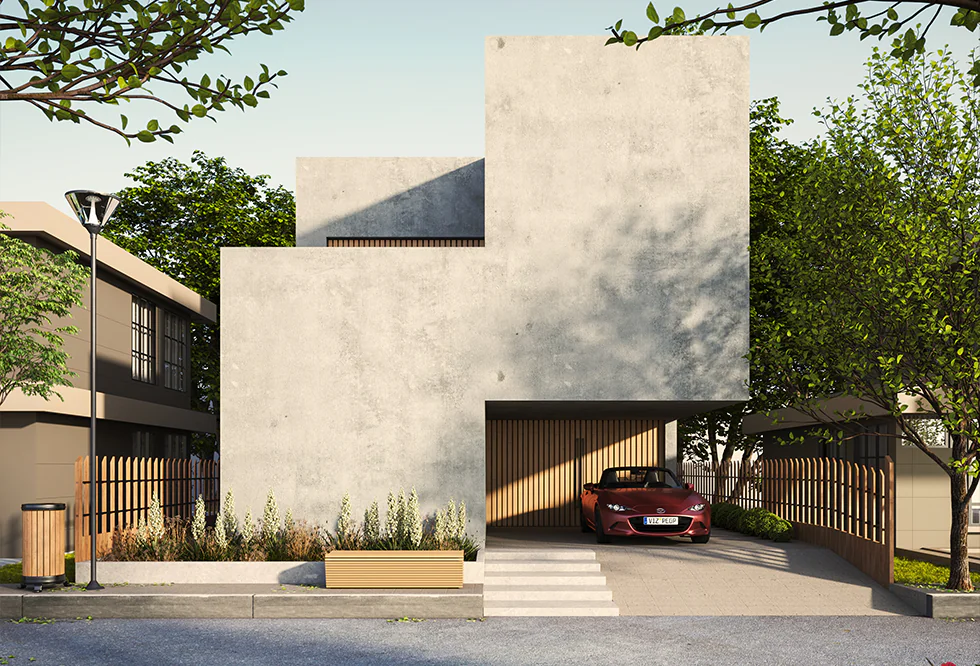
We would be doing you a disservice if we painted off-plan investment as risk-free. It is not. The skepticism surrounding "buying a render" is born from real issues that plague the unregulated corners of the Bali market.
1. The "Rubber Time" (Jam Karet)
In Indonesia, time can be fluid. A project promised in 12 months might drag on for 18. Delays can be caused by rainy seasons, supply chain issues, or religious ceremonies halting work.
- The Impact: Every month of delay is a month of lost rental income. If you calculated your ROI based on a January opening and the villa isn't ready until July, your first-year projections are shattered.
2. The Quality Gap
This is the most common fear. The render shows Italian marble and solid teak wood; the reality delivers ceramic tiles and plywood. Unscrupulous developers may cut costs on invisible elements waterproofing, plumbing, foundation depth that only reveal their failure years later when the walls start to leak or crack.
3. The "Ghost" Developer
This is the nightmare scenario. You transfer a deposit to a company that exists only on paper. The "developer" is a shell entity with no track record, no physical office, and anonymous owners. When the going gets tough or if they simply mismanaged the funds they disappear. The land remains empty, and the investor is left holding a contract with a ghost.
The Transparency Antidote: The JK Global Properties Standard
It is here, in the discussion of risk, that we must draw a hard line between the "market" and JK Global Properties.
The risks mentioned above anonymity, lack of accountability, vanishing developers thrive in the shadows. We operate in the light.
We Are Not Anonymous
In an industry often populated by faceless WhatsApp agents and developers hiding behind generic logos, we have taken a radically different approach.
- Public Leadership: Our founders and leadership team are public figures. We do not hide. We are active on social media, we produce video content, and we put our faces and names next to our projects.
- The "Social Proof" Security: In the digital age, reputation is currency. A developer who is publicly exposed has the highest motivation to deliver excellence: their reputation depends on it. We cannot "disappear" because we are building a brand based on long-term authority. When you buy from us, you know exactly who is responsible for your investment.
Boots on the Ground
We are not selling Bali from a remote office in Europe. We are here. We walk the sites, we shake hands with the Banjar, and we oversee the concrete pouring. This physical presence means that when we say a project is "on track," it is verified by our eyes, not just a report from a contractor.
The "Open Kitchen" Philosophy
Just as you trust a restaurant with an open kitchen because you can see the chef working, we believe in open-construction.
- Regular Updates: We provide granular updates photos, drone videos, and structural reports throughout the build. You see the steel reinforcement bars before the concrete covers them. You verify the waterproofing before the tiles are laid. This transparency eliminates the "Quality Gap" fear because you are virtually present at every stage.
Due Diligence Checklist for Off-Plan Success
Whether you choose to invest with us or another reputable developer, protecting your capital requires a strict vetting process. Here is how to audit an off-plan villas Bali investment opportunity:
1. The Track Record Check
Never be the "guinea pig" for a first-time developer unless the risk is heavily priced in.
- Ask to see past projects: Go visit a villa they built 3 years ago. How does it look? Is the paint peeling? Is the wood rotting? A render fades, but a building endures. The condition of their past work is the best predictor of your future villa.
2. The Land Ownership Proof
Before you pay for the construction, verify the land.
- Does the developer actually hold the leasehold title for the land?
- Is the PBG (Building Permit) already issued or in process?
- Red Flag: Never pay a deposit for a project where the land is "under negotiation." You should only fund construction on land that is legally secured.
3. The Contractual Penalties
A fair construction contract protects both parties.
- Penalty Clause: Ensure there is a clause that imposes a financial penalty on the developer for late delivery (e.g., 1‰ per day of delay). While "Force Majeure" (earthquakes, pandemics) is a valid excuse, poor planning is not. This clause keeps the developer accountable to the timeline.
4. The Escrow/Notary Safety
For large payments, consider using a Notary’s escrow account or a payment structure that is strictly arrears-based (you pay after a milestone is reached and verified). This ensures your money is always funding work that has been done, rather than future promises.
Real Estate Integration: Where to Buy Off-Plan Now?

The off-plan market is highly location-sensitive. Currently, we see the highest potential for off-plan appreciation in two specific corridors:
The "Seseh-Cemagi" Belt
This area is currently in the "pre-boom" phase. Buying off-plan here allows you to lock in land prices that are 40% lower than Pererenan. By the time your villa is finished in 12 months, the infrastructure and commercial development in the area will likely have increased the land value significantly, compounding your construction gains.
The "Uluwatu-Bingin" Cliffside
Demand here is outpacing supply. There are very few finished turnkey villas available for sale because they are all rented out. Building off-plan here is often the only way to secure a luxury asset in this prime zone. The scarcity of land ensures that the finished product will command a premium price.
From Render to Reality
The off-plan villas Bali investment opportunity is not for the impatient, but it is undoubtedly for the smart. It is a vehicle for wealth creation that leverages time and vision to generate returns that a finished product simply cannot match.
However, the "render" is only as good as the team behind it. In a market full of beautiful images, the true asset is trust. At JK Global properties, we understand that you are not just buying a villa; you are trusting us with your capital and your dream. That is why we strip away the anonymity. We stand in front of our projects, transparent and accountable, ensuring that the only surprise you encounter is how much better the reality looks than the picture.
Investing off-plan is a journey. Make sure you choose a guide who walks the path with you, in plain sight, every step of the way.